Fresh starts and fair timing
The chat start flow and timing behavior were corrected after the first 1.0 releases.
361 words
Improved fresh-chat behavior.
Adjusted timing around first-use flows.
Kept early 1.0 sessions more predictable.
Portail v1.0.2 shipped on 2026-08-13 as a patch release focused on fresh starts and fair timing. The chat start flow and timing behavior were corrected after the first 1.0 releases. The work is recorded here because small releases are still product history. They change how people sign in, read responses, pay for access, share conversations, open files, or trust the system when something goes wrong.
The main changes were direct: improved fresh-chat behavior, adjusted timing around first-use flows, and kept early 1.0 sessions more predictable. That list is intentionally plain. It names what changed without turning the release into theatre. When a release fixes a build, a redirect, a storage path, or a UI edge case, the value is often that users stop noticing the problem. The archive keeps that invisible work visible enough for future debugging and for anyone checking whether Portail has cared about the details over time.
This version also fits into the wider Portail contract. One account, one chat history, and one model picker only work if the smaller pieces keep their promises. Authentication has to fail clearly. Billing has to count honestly. Uploads have to arrive in a form models can read. Admin tools have to show the operator what happened instead of hiding it behind a blank screen. v1.0.2 moved that contract forward in its own narrow lane.
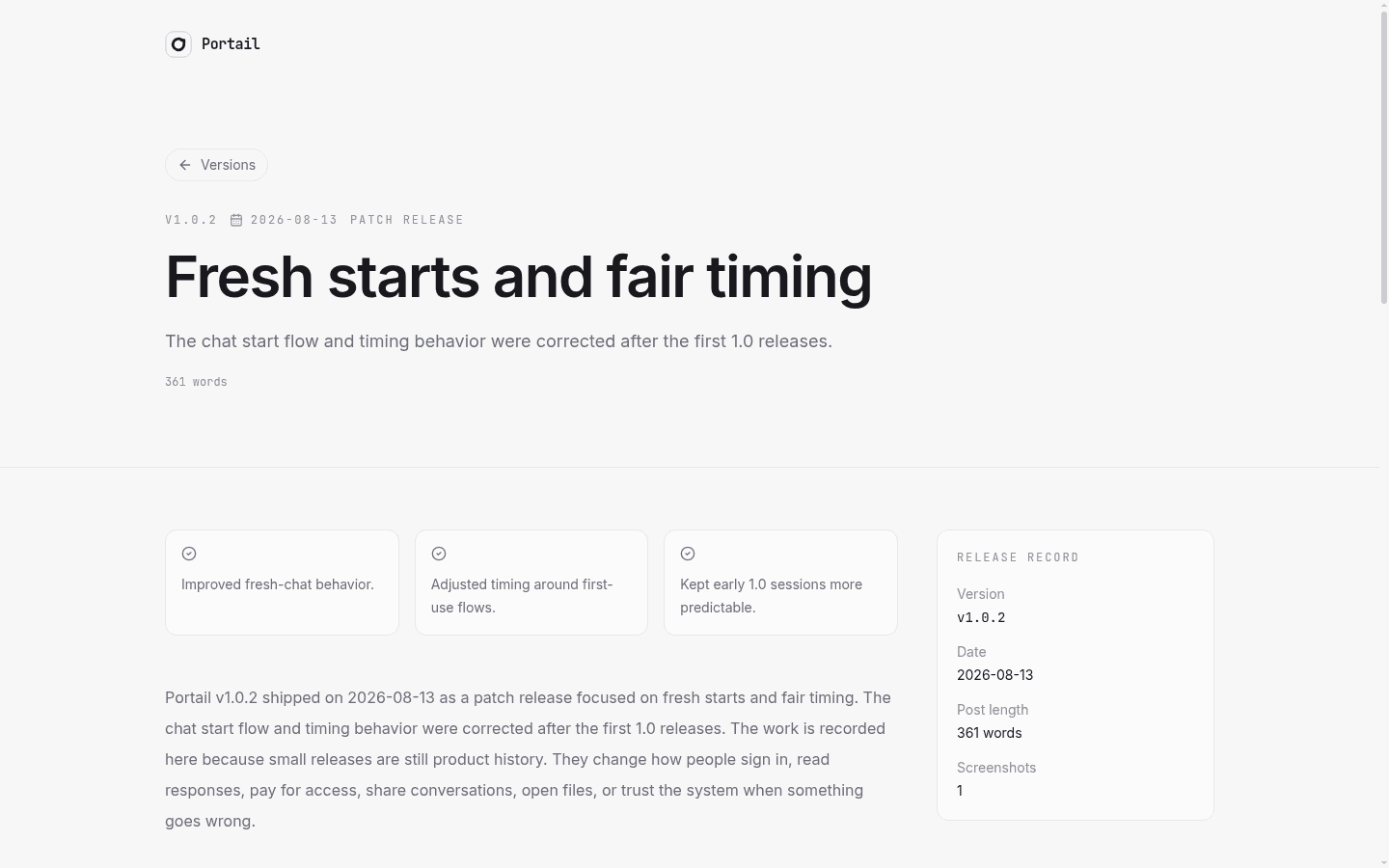
The screenshots attached to this entry show the public release record as it now appears on portail.cc. For older releases, this archive was rebuilt from the git history, package version changes, release modal text, and commit subjects. That means the page is honest about its source: it documents the shipped change and preserves the record going forward, even when the exact old production screen cannot be recreated from a single saved image.
The practical result is simple. Someone landing on this page can see the version number, date, release tier, headline, highlights, and a real rendered screenshot of the archive page. Search engines can index the post through the canonical URL, sitemap entry, and structured data. Future releases now have a standard to meet before deploy, so the history should get cleaner from here instead of fuzzier.
Screenshots